Fixing Yard Drainage Problems with Landscape Rock
Nothing is worse than a soggy yard. Puddles and water pooling up near the house can turn into a real mess. If you have water sitting around your property where it doesn’t belong, you’re probably wondering what can help.
At Bayshore Materials, we’ve been helping folks all around the Northern Bay Area deal with drainage headaches with landscape rock delivery near Vallejo. Landscape rocks aren’t just simply for decoration, they’re also one of the best tools you can use for managing water flow.
Let’s break down how different types of rocks can help with drainage, where to use them, and which types work best.
How Do Rocks Actually Help Water Drain?
It’s pretty simple, really. Unlike solid dirt or mulch that soaks up water and holds onto it, rocks leave gaps that allow water to flow through. This helps by:
- Stopping surface runoff that can carry soil away
- Letting water soak into the ground more easily
- Guiding water to where it’s supposed to go
Best Places to Use Rock for Drainage
You don’t need to cover your whole yard in gravel. Just place rocks strategically where water tends to collect.
Around Your Foundation
Create a gravel or river rock border (1–2 feet wide) along your home’s foundation. This keeps water from soaking into the ground right next to your home and helps prevent leaks or damp spots indoors.
Drainage Swales and Dry Creek Beds
If your property naturally has low spots or slopes, filling them with rock can slow down water flow, preventing erosion and keeping water from soaking in.
French Drains
A classic solution that involves digging a trench, laying perforated piping, and surrounding it with gravel. It collects water and redirects flow to a safer location, away from your home.
Walkways and Paths
Instead of using concrete or pavers that shed water, try gravel or crushed stone. These types of surfaces allow water to pass through and reduce puddles and pooling.
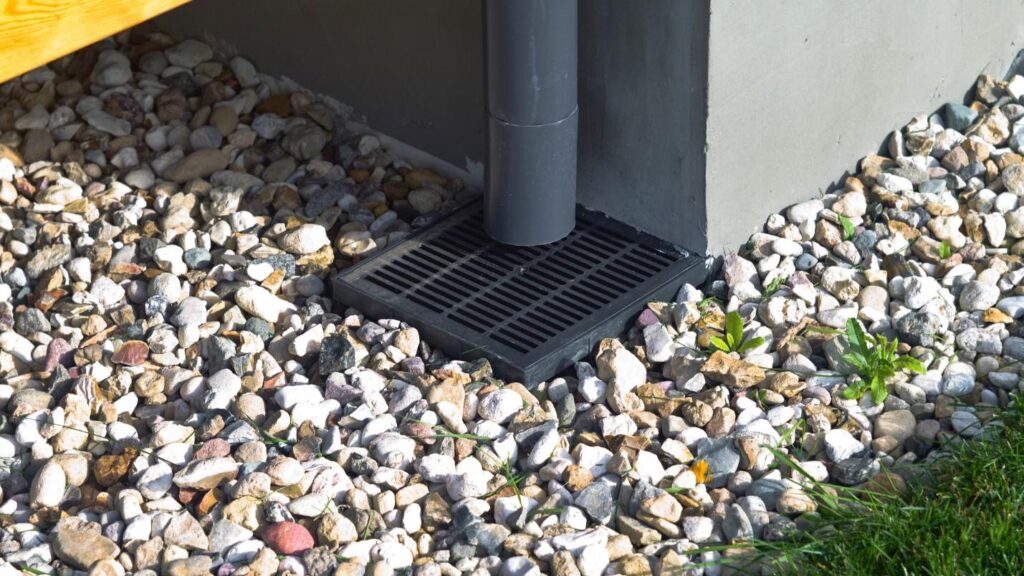
Under Gutter Downspouts
Where your gutters release water, place a splash pad made of river rock. It softens the impact, spreads the flow, and reduces muddy messes.
Best Types of Rock for Drainage
Not all landscape rock works the same. Here’s a quick guide:
Crushed Rock (¾” or 1½”)
Angular and stable, this is ideal for French drains, backfill, or base layers. Water flows easily between the sharp edges.
Pea Gravel
Small, smooth, and round—perfect for walkways or decorative spots. It drains well but can compact over time, slowing water flow.
River Rock
Larger, rounded stones naturally found in riverbeds. These are great for dry creek beds, around water features, or under downspouts, and are heavy enough to stay put.
Drain Rock
Sold specifically for drainage, it’s typically screened to a uniform size and washed clean of fine particles. Less dust means more drainage capacity. Excellent for serious water management systems.
Quick Tip: Always Use Landscape Fabric
Before laying rock, install landscape fabric over the soil. This:
- Blocks weeds
- Prevents soil from mixing into your rock layer and clogging gaps
It’s a simple step that makes a big difference. Don’t skip it.
Need Landscape Rock in Vallejo? We’ve Got You Covered
Ready to take care of those drainage problems for good? Come by Bayshore Materials in Vallejo. We carry a wide selection of drainage rocks and can help you figure out exactly what you need for your project.
Even better—we offer landscape rock delivery, so you don’t have to haul a thing. Call us at 707-644-0859 or contact us today to get your project started.

Owner and President, Bayshore Materials, Inc
Keith Orantes is the Owner and President of Bayshore Materials, Inc., a family-run landscaping, masonry, and concrete supply center serving the North Bay since 1964. He joined the company in 1983 and has helped expand product lines and delivery capabilities, including concrete U-Cart trailers, four-yard concrete delivery, and a broad catalog of brands and materials used by contractors and homeowners across the region. Keith oversees day-to-day operations, customer service, and supplier relationships, and is known locally for hands-on support that helps customers select the right tools and materials for the job. Bayshore Materials operates from its Vallejo headquarters and serves surrounding cities with in-store pickup and scheduled deliveries.
