
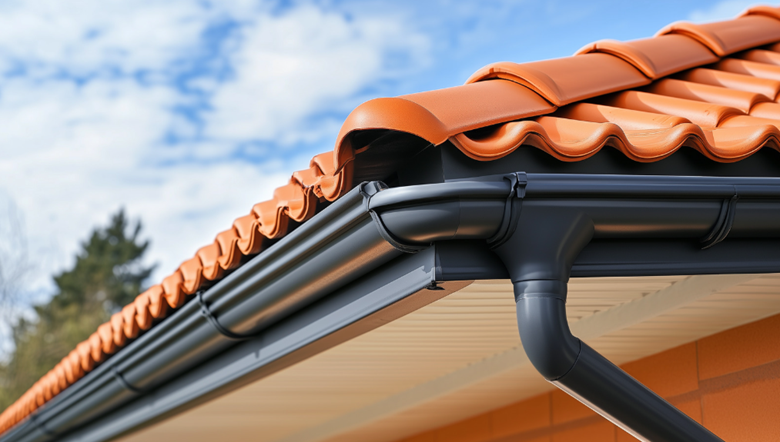
Drainage Solutions: How Do You Move Rainwater from a Home?
Rain in Vallejo does not fall gently. When a storm rolls in off the bay, gutters fill fast and downspouts dump water right against the foundation. Without a plan for where that water goes next, it finds its own path, and that path usually ends somewhere costly: under a slab, in a crawlspace, pooling against a fence line, or cutting a channel through the yard.
Good downspout drainage takes some planning and the right materials, and neither part is complicated once you know what to buy and why.
If you have been searching for a drainage materials store near me in Vallejo, you already know the parts add up quickly, so getting the plan right the first time matters.
Key Takeaways
- Downspout drainage starts with a plan for where the water will go, not with buying parts.
- Solid pipe carries water. Perforated pipe collects water. They are not interchangeable.
- Fittings and adapters keep the system watertight where the downspout meets the buried line.
- Catch basins add value when surface water also needs somewhere to drain.
- Site slope, soil type, discharge point, and local rules shape every design decision.
- Winter is the worst time to discover a drainage problem, so plan the work in the dry months.
What Proper Rainwater Drainage Actually Requires
Every downspout drainage setup has three jobs:
- Catch the water
- Carry it
- Release it somewhere safe
Miss any of the three and the system backs up, overflows, or dumps water where it started.
- At the catch point, you need a leak-free connection from the downspout to the underground line.
- In the middle, you need pipe that can handle the flow rate coming off the roof.
- At the discharge point, you need a spot where water can leave the property without hurting anything, whether that is a curb, a dry well, a swale, or an approved storm connection.
Before buying anything, walk the property during or right after a rain. See where water actually goes. That five minute walk saves hours of guesswork later.
Start With Where the Water Should Go
The discharge point drives every other decision, so plan it first. It sets the slope, which sets the route, which sets the depth, which sets the fittings list.
For a home on a flat lot, the discharge might be a pop-up emitter at the far edge of the yard or a tie-in to the street.
For a hillside property, gravity does most of the work, but you still need to control where the water lands so it does not undercut a neighbor’s fence or wash out a retaining wall.
A few questions to answer before you dig:
- Where does the water exit the property today?
- Is there enough fall from the downspout to the discharge point? Aim for at least 1/8 inch per foot.
- Are there utilities in the trench path? Call 811 before digging.
- Is a permit required for the discharge location? Vallejo has its own rules.
Solid vs Perforated Pipe: Pick the Right One
This is where a lot of DIY jobs go sideways. Solid pipe and perforated pipe look similar on a shelf, but they do opposite things.
Solid pipe carries water from point A to point B without letting any escape. Use it for downspout lines that move roof runoff through the yard to a discharge point.
Perforated pipe has slots or holes along its length so water can enter or exit through the pipe wall. Use it for French drains and yard drains where the job is to collect groundwater, not carry roof runoff.
- Running roof water through perforated pipe puts that water right back into the soil next to the foundation, which defeats the purpose.
- Running yard water through solid pipe means the pipe cannot collect anything.
Drainage materials store near me in Vallejo shoppers ask about this every winter, usually after a system stopped working.
If you want a French drain and a downspout line in the same project, run them as separate systems that only meet at the discharge point, or wrap the perforated section in a filter sleeve and set it in a proper gravel bed.
Drain rock surrounds the perforated pipe so water can move freely into it without silt clogging the perforations. Plan on roughly 1 cubic yard of rock per 10 to 15 feet of trench, depending on trench width and depth.

Solid vs Perforated Pipe: Pick the Right One
Fittings and Adapters Do the Quiet Work
The connection between a metal or vinyl downspout and a buried pipe is where most drainage problems start.
- The sizes do not match
- The angles are awkward
- Water hits the transition at full velocity during a storm
A proper downspout adapter steps the rectangular downspout outlet down to a round pipe fitting, usually 3 inch or 4 inch. From there, elbows, wyes, and couplings route the flow underground.
A few parts worth stocking before the job starts:
- Downspout to pipe adapters sized for your gutter
- 45 degree elbows for smoother flow (90 degree elbows restrict water at high volume)
- Wye fittings if two downspouts share a line
- Cleanout access at any long run or major direction change
Skipping the cleanout is the mistake people regret most. When a line clogs, and eventually one will, a cleanout turns a two hour fix into a five minute one.
When to Add a Catch Basin or Drain Box
Downspouts handle roof water. Catch basins handle everything else:
- Patio runoff
- Driveway pooling
- That low spot in the yard that turns into a pond every winter
A catch basin is a boxed inlet with a grate on top. Surface water flows in, then out through a solid pipe that ties into the same drainage run as the downspouts.
For homes with hardscape, walkways, or slopes that push water toward the house, adding one or two catch basins can be the difference between a dry crawlspace and a call to a mitigation contractor.
Size the basin to the drainage area it serves, and set the grate slightly below the surrounding grade so water actually reaches it. If you are unsure how many basins a yard needs or where to place them, a local drainage materials store near you in Vallejo can help. Bayshore Materials has seen how local lots drain across every neighborhood in town, and that experience saves time when the plan is still on paper.
Site Factors That Change Everything
Four site conditions decide what will actually work before you order pipe.
Slope
You need consistent fall from inlet to outlet. On a Vallejo hillside lot, this is easy. On a flat lot, expect a longer run or a deeper trench to get there.
Soil
Vallejo has a mix of clay, loam, and rocky fill depending on the neighborhood. Clay does not absorb water, so infiltration systems like dry wells often fail in clay-heavy yards. Rocky ground makes trenching harder but drains well on its own.
Discharge Location
Some spots are obvious: a curb, a swale, an existing storm inlet. Others need engineering: a dry well, a rain garden, or a pump if there is no gravity option.
Local Requirements
The City of Vallejo has rules about where you can discharge stormwater, especially near curbs and public rights-of-way. Check before you connect anything to the street.
Common Mistakes to Avoid
- Mixing solid and perforated pipe in the same continuous run
- Using 90 degree elbows where 45s would flow better
- Skipping cleanouts on long lines or under grate covers
- Under sizing pipe for the roof area it drains (4 inch is standard for most homes; 3 inch works for small runs)
- Discharging water toward a neighbor’s property or back at a foundation
Why Contractors Trust Bayshore Materials for Project Supplies
Bayshore Materials has stocked drainage products for Vallejo contractors and homeowners since 1964. The yard carries everything you need to tie a system together:
- Perforated pipe
- Catch basins
- Drain boxes
- Drain rock
- Drain sleeves
- Fittings and adapters
For anyone searching for a drainage materials store near me in Vallejo, bring in a rough sketch or a photo and the team can help you build a materials list that fits the job.
Get Ahead of the Rainy Season
Winter arrives faster than most homeowners plan for. Getting drainage in before the first heavy rain is worth doing.
Call Bayshore Materials at (707) 644-0859 or contact the team online to check availability, request a quote, or schedule delivery.
Frequently Asked Questions
What Size Pipe Should I Use for Downspout Drainage?
4 inch is standard for most homes. 3 inch works for very short runs or small roof areas. Undersized pipe backs up during heavy rain.
Do I Need a Permit to Install Drainage in Vallejo?
For work inside your property line, usually not. For discharge to the street, sidewalk, or public right-of-way, check with the City of Vallejo Public Works Department first.
When Is the Best Time to Install Drainage?
Late spring through early fall. Dry soil is easier to trench, and you want the system tested well before the winter storms.
Where Can I Get Drainage Materials in Vallejo?
Bayshore Materials in Vallejo stocks perforated pipe, catch basins, drain rock, sleeves, and fittings. Call 707-562-0568 for pickup, delivery, or product guidance.
