
Bulk vs. Bagged Mulch: Which is Best for Your Project?
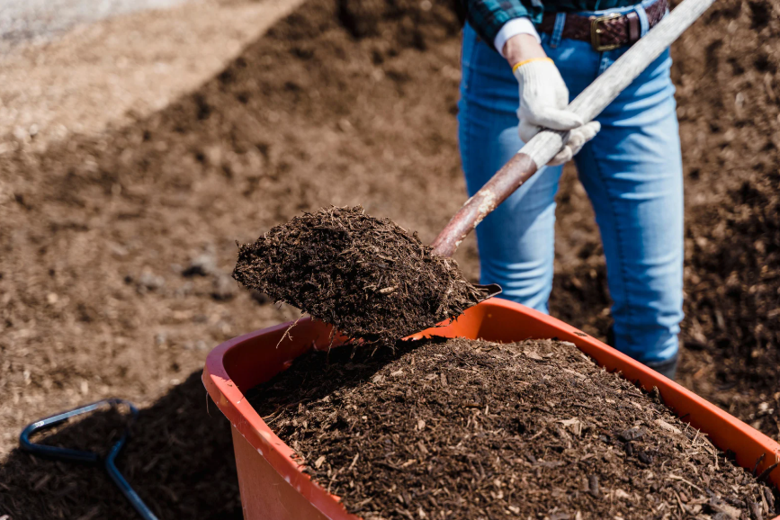
Standing in a parking lot with a pickup bed full of split mulch bags, doing math about how many more trips it’ll take to finish a commercial landscape install. That’s a common Vallejo jobsite scene, and it usually means someone bought bagged mulch when the project called for bulk.
Bulk and bagged mulch look nearly identical once spread. The buying, hauling, and site logistics behind each are very different. For a single residential bed, bagged might be the right call. For a multi-thousand-square-foot commercial job or a full HOA landscape refresh, bulk almost always wins on cost, time, and cleanup.
The differences, coverage math, and jobsite factors below will help you decide which type of mulch fits your project. Bayshore Materials, a building materials store near me in Vallejo, answers this question for contractors every day and can help get the order right the first time.
Key Takeaways
- Bulk mulch is sold by the cubic yard and typically costs less per unit of coverage than the equivalent volume in bags, especially on projects over 3 yards.
- One cubic yard of mulch covers roughly 100 square feet at 3 inches deep and equals about 13 to 14 bags of 2-cubic-foot mulch.
- Bulk saves loading time and cleanup on larger jobs but needs open dump space or a tarped pickup bed.
- Calculating cubic yards before ordering cuts down on wasted trips, leftover material, and next-day rush orders.
Bagged Mulch: What You’re Buying and When It Works
Bagged mulch is landscape mulch (bark, wood chips, colored wood, playground fiber, or shredded material) packaged in plastic bags at the manufacturer. Common bag sizes in California are 1 cubic foot, 1.5 cubic feet, and 2 cubic feet. You’ll find it stacked on pallets at the yard, priced per bag.
Bagged mulch fills a narrow role well.
- Homeowners doing 1 or 2 small flower beds
- Property managers touching up a single entryway
- Contractors picking up a specialty color for a finishing detail are the typical buyers
Past that scale, the format starts working against you.
What bagged mulch involves:
- A per-bag price that adds up quickly (usually $4 to $10 per bag) and runs higher per cubic foot than bulk
- 13 to 14 bags to equal a single cubic yard, meaning even a modest 5-yard job requires around 70 bags
- Manual loading and unloading, one bag at a time, on both ends of the trip
- 70+ empty plastic bags to bundle and dispose of after a mid-size job
- Multiple pickup trips for anything beyond a few yards, since a standard pallet holds roughly 65 bags
Bagged makes sense when the project calls for a small volume, a very tight jobsite, or a product not available in bulk immediately. For anything running past 3 cubic yards, the per-bag price, handling time, and packaging waste usually cost more than the convenience saves.
Bulk Mulch: What You’re Buying and When It Works
Bulk mulch is the same landscape material sold loose, measured and priced by the cubic yard rather than the bag. At a Vallejo materials yard like Bayshore, bulk product sits in bins or open piles and gets loaded into a truck, trailer, or delivery vehicle with a front loader.
Bulk mulch fills large and versatile projects well:
- Landscape contractors on medium and large jobs
- HOA maintenance crews, property managers running multiple sites
- Municipal projects
- Homeowners refreshing a full backyard or side lot
What bulk mulch includes:
- Sold by the cubic yard (1 cubic yard = 27 cubic feet)
- Priced per yard, typically $30 to $60 depending on product type
- Loaded directly into trucks or trailers with a front loader
- Same product options as bagged in most cases: bark, cedar, redwood, colored blends
- Delivery available for larger orders when pickup isn’t practical
Bulk needs a drop spot, which is rarely an issue on jobsites. A driveway corner, a tarped area, or an out-of-the-way section of the property handles a 2 to 10 yard pile fine. From there, a wheelbarrow or skid steer moves material to the beds at the crew’s pace. Most contractors already have this dialed in from other bulk materials.
Why the Choice Matters on Larger Projects
Contractors bidding a job know their margins depend on material costs and labor hours. On mulch alone, choosing wrong can burn both.
A 2,000-square-foot commercial planting bed at 3 inches deep needs roughly 18 to 20 cubic yards of mulch. In bags, that’s around 250 bags of 2-cubic-foot product. In bulk, it’s 2 to 3 loader scoops.
Buying Bagged:
- 2 to 3 pickup trips or a rented flatbed
- Manual loading and unloading of 250 bags
- 250 empty plastic bags to dispose of
- Higher per-yard cost, sometimes 40% higher than bulk
Buying Bulk:
- 1 delivery or 1 to 2 truck trips with a trailer
- 10 to 20 minutes of loader time
- No packaging waste
- Lower material cost per yard
That’s the difference between a half-day mulching job and a full day of hauling bags. For property managers running quarterly refresh cycles across multiple sites, the math gets even clearer as the jobs stack up.
Calculating Correct Quantities Before You Order
Getting the volume right up front is the single biggest thing that separates smooth mulch jobs from repeat trips.
The Basic Formula
Length (ft) x Width (ft) x Depth (in) / 324 = Cubic Yards
Example: A 40 ft x 25 ft planting bed at 3 inches deep.
40 x 25 x 3 = 3,000.
3,000 / 324 = 9.26 cubic yards.
Round up to the nearest half or full yard when ordering bulk (order 9.5 or 10 yards). Spreading a little extra is easier than running back for a partial yard.
Coverage guidelines by depth:
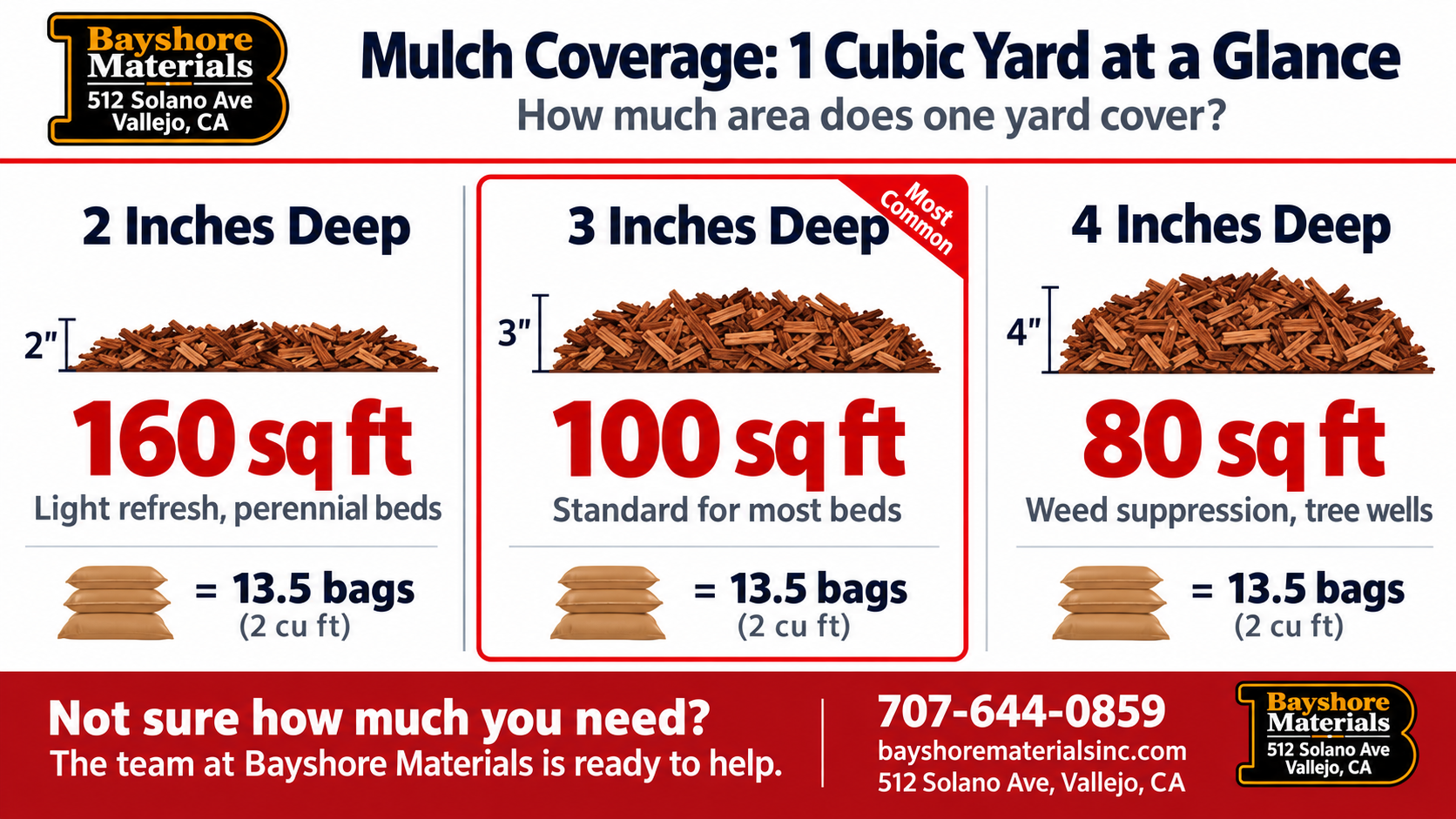
- 2 inches: 1 cubic yard covers ~160 sq ft (light refresh or perennial beds)
- 3 inches: 1 cubic yard covers ~100 sq ft (standard for most beds)
- 4 inches: 1 cubic yard covers ~80 sq ft (weed suppression, tree wells, new plantings)
Bag conversion: 1 cubic yard = about 13.5 bags of 2-cu-ft mulch, or 27 bags of 1-cu-ft mulch.
Common Estimating Mistakes
- Measuring only visible bed area and forgetting mulch pushes back under shrubs
- Ordering “enough” without picking a depth first
- Skipping the yard-to-bag conversion when comparing prices
- Forgetting mulch settles about 15 to 20% over the first month
When a project has odd-shaped beds, tree wells, or slopes, bringing rough measurements to a building materials store near me in Vallejo lets the counter staff double-check the math before you commit to a load.
Job-Site Factors That Drive the Correct Decision
Beyond project size and cost, 4 practical factors decide whether bulk or bagged fits your specific job.
Transportation
- Bagged mulch loads into any vehicle: a pickup, an SUV, a work van, even a car trunk.
- Bulk needs a pickup with an open bed or a trailer, with someone at the yard operating a loader to fill it.
For contractors already running pickup fleets, bulk is easy. For homeowners with a sedan, delivery is available to schedule.
Jobsite Access
Where can the delivery truck actually go?
If the property has a wide driveway, a gate that opens for a dump truck, or a nearby parking area, bulk delivery works. If the mulch bed sits behind a locked side yard with a 30-inch gate, bagged might be the only way to get material in without moving fence panels.
Storage
- Bagged mulch can sit on a pallet in a garage or side yard for weeks with no issues.
- Bulk dumped on a driveway needs to be tarped if rain’s in the forecast and spread within a few days to avoid staining concrete.
Multi-phase projects that pause between beds sometimes go bagged for this reason, though a tarped bulk pile handles short delays just fine on most job sites.
Waste and Cleanup
- Bagged mulch leaves piles of empty plastic bags to dispose of.
- Bulk mulch leaves stray material on the driveway or street that gets swept up at the end. Some HOAs and city permits care about this.
For municipal jobs in Vallejo and Solano County, cleanup expectations are often written into the contract.
Which Mulch Purchase Should You Choose?
Choose Bagged Mulch If:
- Your project needs less than 3 cubic yards total
- You’re transporting in a sedan, SUV, or work van without an open bed
- The jobsite has limited access, a narrow gate, or no dump area
- You need to store mulch dry for weeks between install phases
- You want specialty colors or products not currently stocked in bulk
- You’re doing multiple small beds across different properties on the same day
Choose Bulk Mulch If:
- Your project needs 3 cubic yards or more
- You have a pickup truck, trailer, or the ability to schedule delivery
- The site has open driveway or parking access for dumping
- You want the lower per-yard cost bulk usually
- You’re spreading within a few days of delivery
- You’re a contractor or property manager with recurring mulch needs across multiple jobs
For projects that sit right at the 3-yard threshold, the tiebreakers are usually access and transportation. If a dump truck can reach the pile location and the crew can spread within a day, bulk wins. If not, the convenience of bags often justifies the higher unit price.
Why a Local Supplier Matters
A local materials yard adds something an online order can’t: someone at the counter who can double-check your quantities and product choice before the sale.
Bayshore Materials has served Vallejo, Solano County, Napa, and the greater Bay Area since 1964. For mulch specifically, that means the counter staff has seen thousands of jobs come through and knows what tends to go wrong.
What a local building materials store near me in Vallejo can do that a general store can’t:
- Double-check your cubic yard math before you commit
- Recommend a mulch type based on local climate, water restrictions, and plant palettes
- Schedule pickup times around your crew’s schedule
- Advise on truck loading capacity so a half-ton pickup doesn’t get overfilled
- Coordinate delivery windows for multi-material orders (mulch, base rock, decorative stone on one truck)
- Recommend a bagged product when bulk isn’t the right call, even if the bulk sale would be bigger
For contractors juggling multiple jobs across the Bay Area, having a supplier who knows local conditions and flags issues before they hit the site is worth more than a few dollars per yard.
Get the Right Mulch for Your Project
Whether the next job needs 2 bags or 20 yards, Bayshore Materials can help work out the right product, quantity, and delivery plan before the order goes through. The team has been supplying Vallejo, Solano County, Napa, and Bay Area contractors with landscape materials since 1964, and mulch questions are part of the daily routine.
Call Bayshore Materials at (707) 644-0859 or contact the team online to check availability, request a quote, or schedule delivery.
Frequently Asked Questions
How Many Bags of Mulch Equal One Cubic Yard?
One cubic yard equals 27 cubic feet, which works out to about 13.5 bags of 2-cubic-foot mulch or 27 bags of 1-cubic-foot mulch. Standard retail bag sizes vary, so check the label on the pallet before doing the conversion.
How Deep Should Mulch Be Applied?
Standard practice is 2 to 4 inches deep depending on the goal. 2 inches works for refreshes over existing mulch. 3 inches is the standard depth for most new applications. 4 inches suits weed suppression, moisture retention in dry areas, or tree well applications. Deeper than 4 inches can cause root suffocation and moisture problems.
What If I Order Too Much Mulch?
Leftover bulk mulch can be tarped and stored for a week or two, spread thinner over existing beds, or used to top off tree wells and pathways. Leftover bagged mulch stores well for months if kept dry. Ordering slightly over is usually better than running short and doing a second trip.
Is Colored Mulch Worth the Extra Cost?
Colored mulch (typically dyed brown, red, or black) holds appearance longer than natural bark, usually keeping color for a full season versus a few months. Cost runs 20 to 40% higher per yard. For visible commercial or HOA installs where curb appeal matters, colored mulch often justifies the premium. For back yards or hidden beds, natural bark is usually fine.

Owner and President, Bayshore Materials, Inc
Keith Orantes is the Owner and President of Bayshore Materials, Inc., a family-run landscaping, masonry, and concrete supply center serving the North Bay since 1964. He joined the company in 1983 and has helped expand product lines and delivery capabilities, including concrete U-Cart trailers, four-yard concrete delivery, and a broad catalog of brands and materials used by contractors and homeowners across the region. Keith oversees day-to-day operations, customer service, and supplier relationships, and is known locally for hands-on support that helps customers select the right tools and materials for the job. Bayshore Materials operates from its Vallejo headquarters and serves surrounding cities with in-store pickup and scheduled deliveries.
